Sumps & concrete tanks · up to 30,000 L
Underground Water Tank Cleaning
Your underground sump receives water first, so it collects the heaviest sludge. We vacuum it out, scrub and disinfect the tank, and send you photo proof — from ₹799.
Underground tank cleaning prices
Prices are per tank, by maximum capacity. If your sump is between two sizes, choose the band its full capacity falls into.
Underground
Up to 1,500 L
Compact sumps under single homes and shops.
₹799₹899/ tank
Underground
1,501–3,000 L
The typical sump under an independent house or builder floor.
₹1,099₹1,299/ tank
Underground
3,001–5,000 L
Larger residential sumps and small commercial storage.
₹1,599₹1,899/ tank
Underground
5,001–10,000 L
Multi-floor buildings, schools and offices.
₹2,599₹3,099/ tank
Underground
10,001–15,000 L
Apartment blocks and commercial premises.
₹2,999₹3,699/ tank
Underground
15,001–20,000 L
Society and institutional reservoirs.
₹3,599₹4,499/ tank
Underground
20,001–30,000 L
The largest single tank bookable online.
₹3,999₹5,099/ tank
Prices are per tank, by maximum capacity. Mixed tank types count together for the quantity discount; a transportation charge of ₹0–₹100 may apply, once per booking, by PIN code.
Clean your overhead tank in the same visit and both tanks count towards the quantity discount:
1 tank
0%
off cleaning
2 tanks
10%
off cleaning
3 tanks
12%
off cleaning
4 tanks
14%
off cleaning
5+ tanks
15%
off cleaning
Why the sump is the dirtiest tank in your building
In most Delhi NCR buildings the underground tank — the sump, or "UGT" in societies — is where water first comes to rest. Municipal supply often arrives for a limited time each day, sometimes at low pressure and sometimes carrying silt after pipeline work. Tanker water, borewell water and occasional backflow all end up here too. Because the water sits still between supply hours, nearly everything it carries settles to the floor.
Over months that sediment becomes a thick, soft layer of sludge — sometimes several centimetres deep in tanks that haven't been cleaned for a year or more. The walls develop biofilm, and in older tanks, cracks in the plaster hold dirt that ordinary washing can't reach. Every time the motor runs, water is drawn from just above this layer and pumped to your rooftop tank.
How we clean an underground tank
- Inspection and isolation. We locate the manhole, check ventilation and switch off the pump that draws from the tank.
- Draining. Remaining water is pumped out. If you need water during the job, store some in buckets first.
- Vacuum de-sludging. Sludge is lifted out with a vacuum machine rather than being swept into the outlet, where it would end up in your plumbing.
- Scrubbing and pressure-washing. Walls, floor, corners and the underside of the slab are cleaned, with attention to cracks and joints.
- Disinfection and rinse. The cleaned surfaces are treated with an anti-bacterial disinfectant, then rinsed.
- Photo proof and handover. You receive before-and-after photos on WhatsApp and the manhole is closed properly.

Real photos from our jobs
Real underground tanks we've cleaned
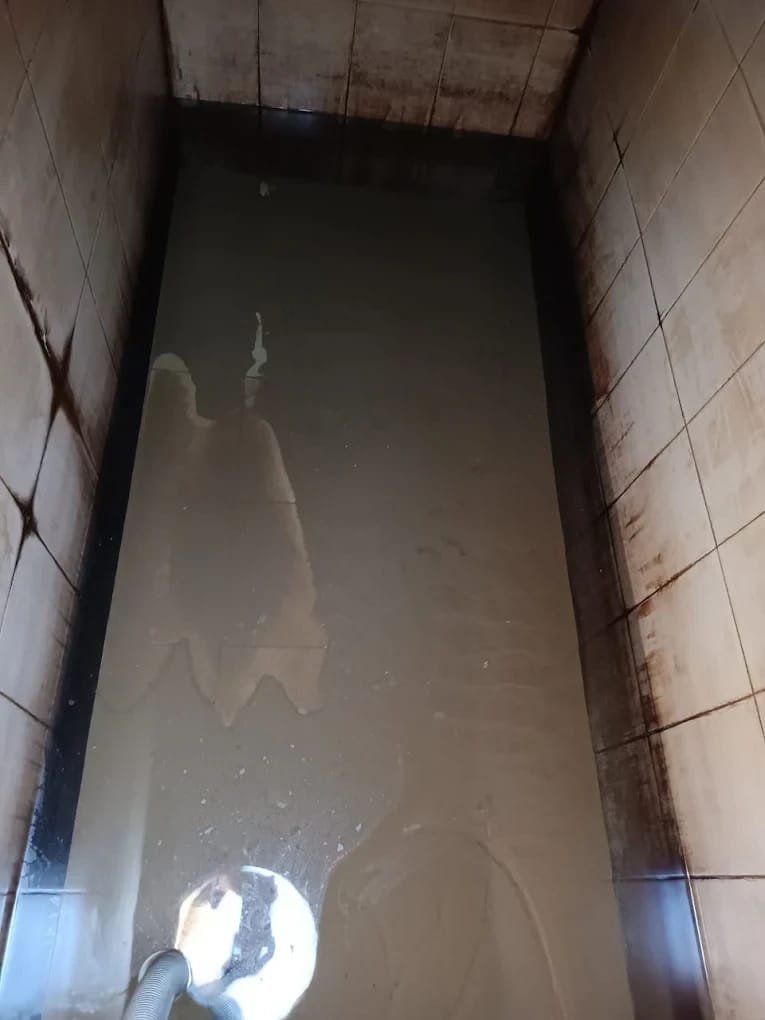
Before cleaning1 photos
After cleaning1 photos
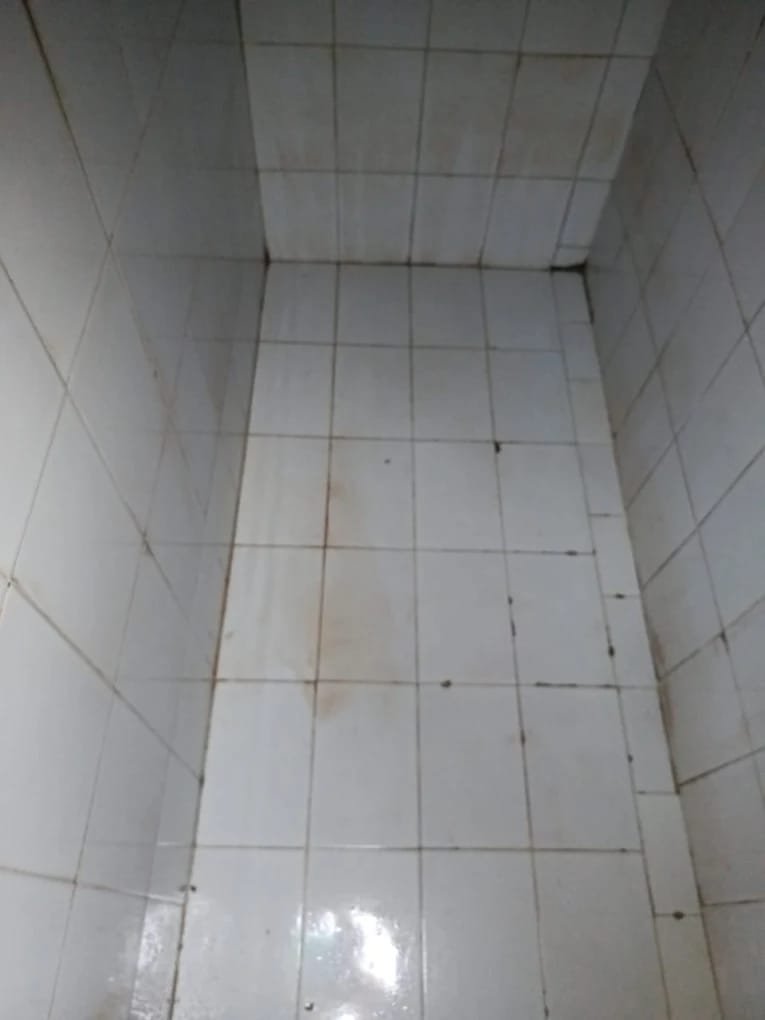
Photos taken by our team on recent jobs in Delhi NCR. Before and after photos are examples and may be from different tanks. Tap a photo to enlarge.
Safety note: underground tanks are confined spaces. Our team ventilates the tank before entry and never works in a sump without someone stationed at the opening. Please don't attempt to enter a sump yourself to clean it.
Concrete tank cleaning: what to look out for
Most sumps are built from concrete or brick with cement plaster. During cleaning our team will tell you if they notice:
- Cracks or seepage — groundwater or drain water can enter through cracks, especially during the monsoon.
- A loose or broken manhole cover — the most common way insects, rodents and dust get in.
- Plaster flaking off the walls or floor, which traps sludge and should be repaired.
- An overflow pipe without a mesh, which lets mosquitoes breed inside.
We clean tanks, not repair them, but we'll flag these so you can get them fixed before the next cleaning.
Access requirements
- The manhole must be accessible — please move vehicles parked over it before the slot.
- Large tanks with very small manholes may take longer; tell us the opening size if it is unusually narrow.
- A power point within reach for our equipment.
Underground tanks in housing societies and commercial buildings
Large underground reservoirs in societies, schools, hotels and offices often hold 20,000 litres or more, and may be divided into chambers. For tanks larger than 30,000 litres, multiple tanks across blocks, or annual schedules, request a written quote on our society water tank cleaning or commercial water tank cleaning pages.
How often should an underground tank be cleaned?
Every six months is a sensible routine for most homes. Clean more often if you rely on tankers or a borewell, if the sump took in water during the monsoon, or if you notice silt in your overhead tank soon after cleaning it. Read our guide on how to remove sludge from a water tank to understand where it comes from.
Underground water tank cleaning in Delhi — underground sump cleaning services
Underground tank cleaning in Delhi is mostly sump cleaning: the concrete tank under the driveway or stairs that stores the municipal supply before it's pumped up. Sumps collect far more sludge than rooftop tanks, so our underground sump cleaning services always start with vacuum sludge removal before scrubbing and disinfection.
Concrete water tank cleaning services
Concrete tanks have rough plaster that holds biofilm, and cracks where silt settles. Our concrete water tank cleaning services include extra scrubbing of corners and joints, and we tell you if we see cracks or a damaged manhole cover that could let dirty water in.
Underground water tank cleaning price
The underground water tank cleaning price depends only on capacity: from ₹799 for a sump up to 1,500 litres to ₹3,999 for 20,001–30,000 litres. Add the rooftop tank in the same visit for a 10% two-tank discount.
Frequently asked questions
What is the price of underground water tank cleaning?
How do I calculate my sump's capacity?
Will the sludge go into my pipes?
Can you clean a sump with a very small manhole?
Do you clean tanks larger than 30,000 litres?
How often should an underground sump be cleaned?
Related pages
- Tank size1,501–3,000 LUnderground tank cleaning for 1,501–3,000 litre sumps for ₹1,099 — the typical house or builder-floor sump. Sludge removal, scrubbing, disinfection, photos.Read more
- Tank size5,001–10,000 L10000 litre water tank cleaning for underground tanks of 5,001–10,000 L for ₹2,599. For buildings, schools and offices. Sludge removal and disinfection.Read more
- ServiceOverhead tanksRooftop & overhead water tank cleaning in Delhi NCR. Plastic, Sintex & concrete tanks up to 10,000 L. Fixed prices from ₹499. Book online.Read more
- GuideRemove sludgeWhere water tank sludge comes from, why you shouldn't flush it through your taps, how it's removed safely, and how to slow it from building up again.Read more
- BusinessHousing societiesWater tank cleaning for housing societies, RWAs and group housing in Delhi NCR. Block-wise schedules, large underground reservoirs, notices and photo records.Read more
- PricesPricesWater tank cleaning price in Delhi NCR: overhead from ₹499, underground from ₹799. Up to 15% multi-tank discount. Full price list.Read more
Ready for a properly clean tank?
Add your tanks, check your PIN code and request a slot online. Pay online or after the job — whichever suits you.